Fatimah Asghar
Flips the Script
With “Brown Girls” and “If They Come for Us,” the award-winning poet and screenwriter brings to life stories that were largely untold in popular culture—until now
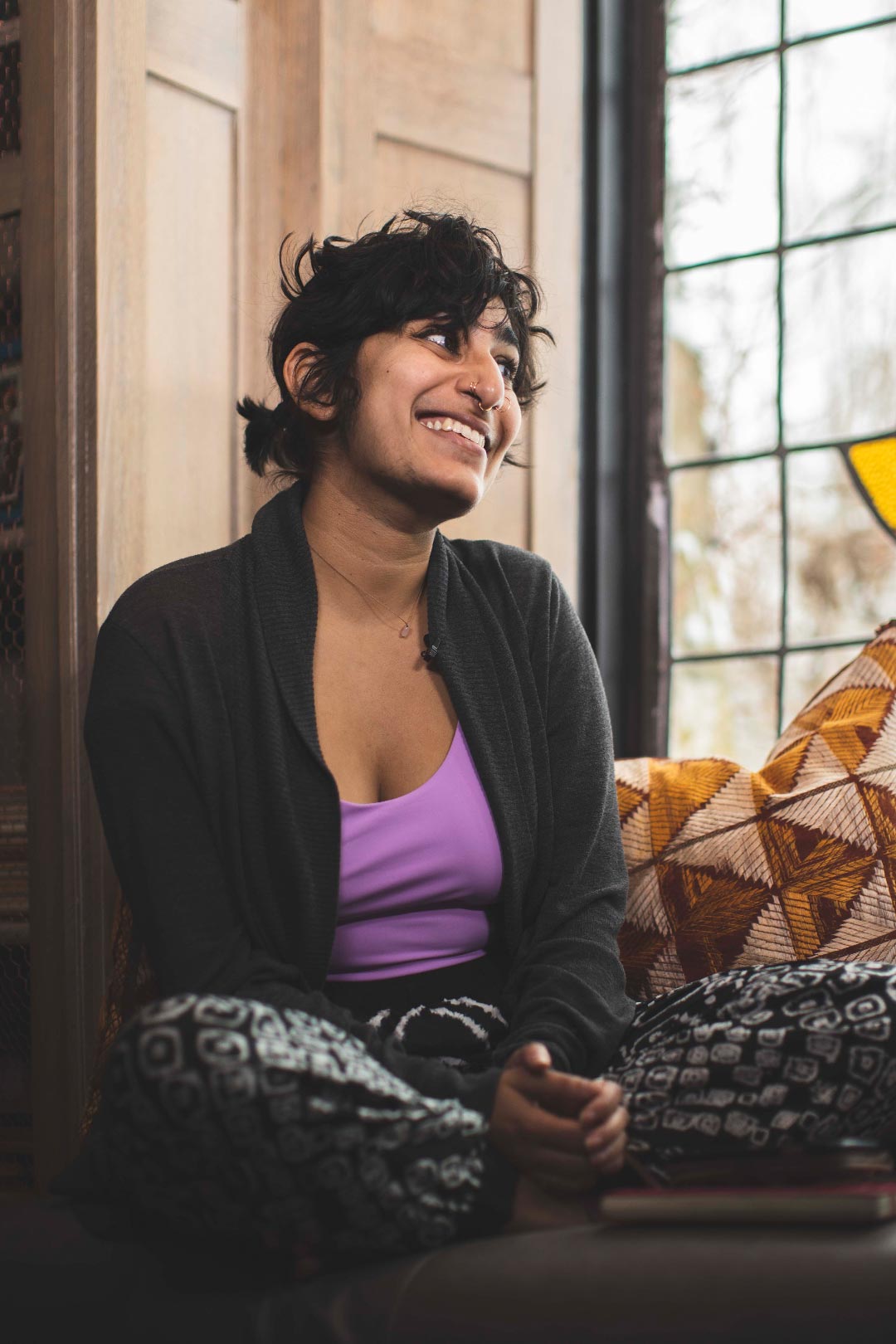

Fatimah Asghar’s Emmy-nominated web series, “Brown Girls,” centers on a 20-something South Asian woman as she grapples with her queerness, her burgeoning career and her complex relationships—primarily with other women of color. It’s the kind of story that’s largely untold in popular culture, which for Asghar is kind of the point. Both in her screenwriting and in her poetry, Asghar has shed light on topics and perspectives that are often ignored, drawing frequently from her own experiences as a first-generation American with roots in Pakistan and divided Kashmir growing up queer and parentless in the aftermath of 9/11. Named one of the top ten books of 2017 by the New York Public Library, her debut poetry collection, “If They Come for Us,” explores the complexities of this hybrid identity and the impact that the 1947 partition of the Indian subcontinent had on her family. We sat down with Asghar at the end of her Further residency to discuss her work, her background and the cultural blind spots that motivate her to dig deeper.
I became a poet because I saw someone perform spoken word for the first time and it was just so beautiful to me. It was like watching someone embody their own story. I saw that in high school, and at that time I was so not confident and so not good at embodying my own story. Actually I was very much into projecting an image of who I was versus letting people know actually who I was. And so seeing someone be that in control of themselves and their story made me, like want to be like that, you know? So in college I started writing poetry and performing and I’ve been doing it ever since.
“I saw someone perform spoken word for the first time and it was just so beautiful to me. It was like watching someone embody their own story.”
Yeah, I do. What I've found is that I feel best when I'm closer to myself when I'm on stage. And that's such a luxury, to be able to have a life where your job is to be yourself. I think it's really amazing and something I don't want to lose.
I love Ross Gay, his work. He's a poet and the way he writes about joy and gratitude is just so complicated, and it's so beautiful to me because it's like taking stock of things that have happened in history and things that are happening now, but still holding gratitude for being alive. I'm inspired a lot by film. A movie that I really love is "A Guide to Recognizing Your Saints” (Dito Montiel, 2006). I love movies that are about folks grappling with their surroundings when they're young, and particularly around gender. I love Patricia Smith, who is amazing as a performer and as a writer and someone I deeply look up to.
I started writing “BrownGirls” actually as a release from poetry in 2015. I had a chapbook called “After,” which had a limited run, that was about the aftermath of sexual assault, and when I would read from it, it was a really heavy layer of art, you know? And I started writing “Brown Girls” as a way of finding joy. I was like, ‘Oh, this is fun.’ And it was something where I was like, ‘Well this is just going to sit on my computer. It’s just something that I'm doing. Okay, cool. Like I've written a draft of it. I'm going to have everyone come together and we're going to do a read aloud of it. Oh okay, cool, now I have a director on it and we're going to go.’ It was very organic in that way. Film has always been such an amazing art form to me, but I always felt like I couldn't do it, because I didn't go to school for it or I didn't know how to do it, you know? And then by just writing “Brown Girls,” I was able to be like, ‘Oh, you can do it. You can do whatever you want. You just actually have to do it.’ That was a really beautiful lesson, and now I write a lot for a screen and poetry and I feel like it's just opened up a whole world to me.
Yeah, I think that travel and environment influence everything. I was always bouncing around when I was growing up, between people who were taking care of me, but also between locations. And it's just fascinating how different you are in different environments. And every time I shift locations, I learn something new about myself and about my art and also about the world.
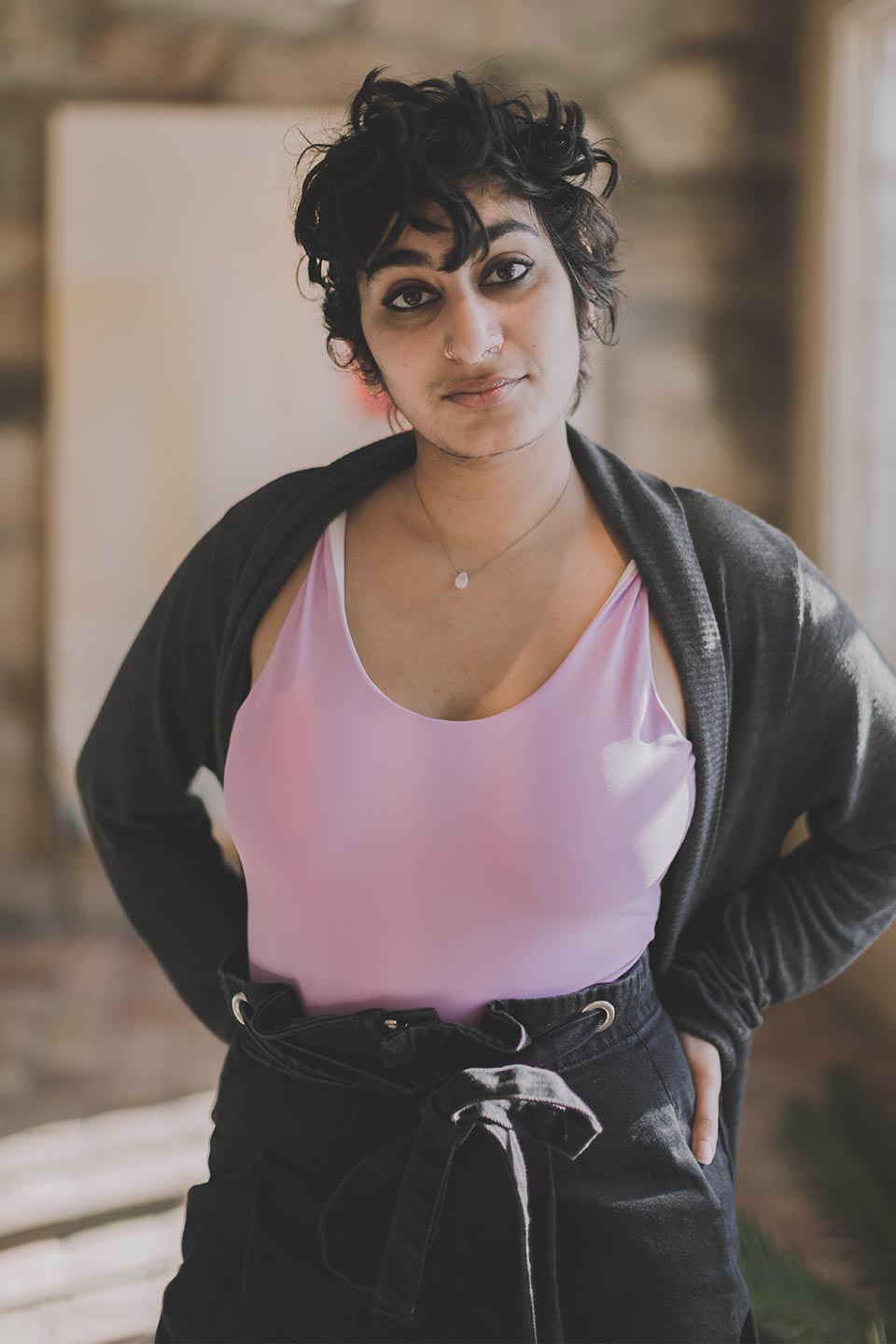
“Women of color don't often get to be considered fully human in film and TV.”
Yeah, I think that travel and environment influence everything. I was always bouncing around when I was growing up, between people who were taking care of me, but also between locations. And it's just fascinating how different you are in different environments. And every time I shift locations, I learn something new about myself and about my art and also about the world.
I think it's really different per project, but in “If They Come for Us,” I couldn't stop writing about partition in indirect and direct ways. And in part it was being South Asian. I learned about partition so late, and it was so troubling to me that this huge historical moment of partition, when colonial Britain left South Asia and divided it into Pakistan and India, where there was so much violence that happened in a period of a few months, and we just never talk about it. And that's something that for South Asian people is so close and so felt, and we're just expected to ignore this huge tragedy that happened not that long ago that informs all of us and informs our ideas of nation states and who we are. And that really came out in that book. And with “Brown Girls,” I felt like women of color don't often get to be considered fully human in film and TV. And I really wanted to have something that reflected the relationships that are in my life and to have these girls be messy and flawed characters and just be struggling, like everyone.